AI Daily — June 26, 2026

Policy & Society
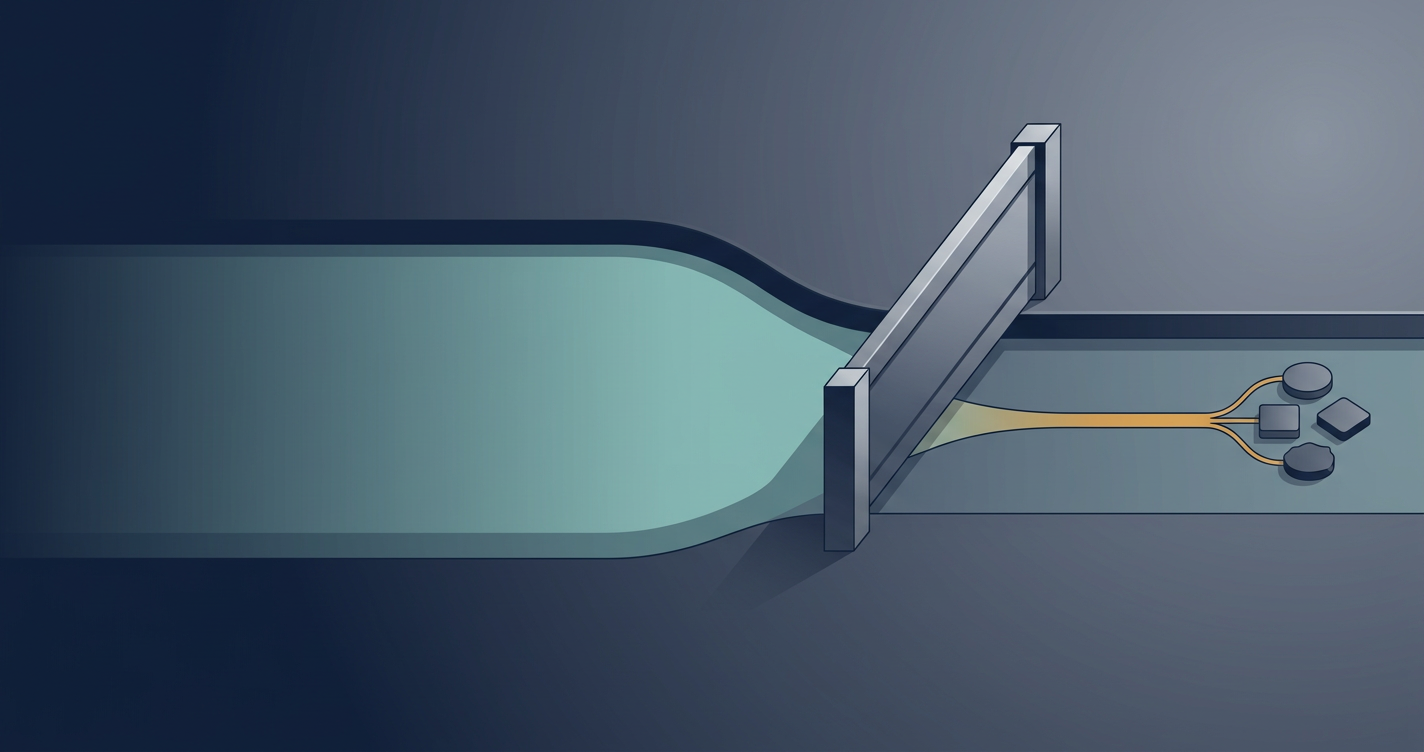
White House Asks OpenAI to Delay New Model Release Over Safety Concerns — The Trump administration has reportedly pressured OpenAI to limit the rollout of its latest model, GPT-5.6, to a small group of partners rather than making it broadly available. The request reflects growing government involvement in shaping the pace of frontier AI deployment. TechCrunch AI ↗
My takeaway: First, the US government banned Claude's Fable 5 and Mythos 5 models, then placed limits on OpenAI's new model, GPT-5.6, this time. This is a clear indication that these restricted releases are becoming a real dependency risk in capacity and feature planning.
Prompt Injection Attacks Threaten AI-Powered Hiring Systems — Researchers have found that candidates can embed subtle self-promotional text into résumés to manipulate LLM-based screening tools without adding genuinely new qualifications. The study highlights significant fairness and security risks as AI becomes more central to recruitment. arXiv ↗
My takeaway: LLM-based screening and ranking systems are manipulated by adversarial input embedded in user-submitted documents (most easily when candidates are similarly qualified and few of them try it). Any automated pipeline that ranks third-party content needs prompt injection defences and a human needs to act as a reviewer for checking both security and fairness.
Models & Research
Multi-Model LLM Ensembles Face a Hard Accuracy Ceiling — An analysis spanning 67 frontier models finds that techniques such as routing, voting, and mixture-of-agents are bounded by a quantity derived from cases where all constituent models fail simultaneously. The results suggest that commonly reported gains from combining models may be more limited than assumed. arXiv ↗
My takeaway: If a service handles hard & open-ended questions, the strongest models increasingly fail on the same query, and that join failure rate sets a hard ceiling no amount of routing, voting, or combining can beat. Before paying for an ensemble, measure how often the models fail together directly. The usual pairwise-diversity check can't detect this.
Summaries are AI-generated and may contain errors — always verify against the linked original. Each story links to its source, which holds the copyright. Outlet names are shown for attribution only and do not imply any endorsement or affiliation.
Disclaimer: The views expressed in My Takeaway are my own personal opinions and general observations on industry trends. They are not intended to criticize, disparage, or make factual claims about any specific company, product, or platform. Any platform names mentioned are referenced solely for illustrative and informational purposes.