AI Daily — June 23, 2026

Industry & Funding
Google DeepMind Commits $75M to AI Filmmaking With A24 Partnership — Google DeepMind is partnering with acclaimed studio A24 in a $75 million deal aimed at developing artificial intelligence tools designed specifically for the film industry. TechCrunch AI ↗
My takeaway: A24's know-how could be the critical differentiator for filmmaking tools they're building.
Models & Research
Randomized YaRN Method Boosts Long-Context Reasoning in Large Language Models — Researchers have introduced a training technique that helps LLMs handle sequences far longer than those seen during pretraining, addressing a persistent generalization weakness in current models. arXiv ↗
My takeaway: By extending context length using short-context training data, this approach may lower the computational burden compared with training directly on large-context training data.
Tapered Language Models Challenge the Uniform-Layer Architecture Assumption — A study questions the long-standing convention of stacking identical layers in transformer models, proposing architectures that vary parameter allocation across depth for improved efficiency. arXiv ↗
My takeaway: Simply reallocating parameters across layers can improve model quality without increasing parameter count or compute costs. For teams training models in-house, this seems like a fairly straightforward optimization to consider.
Tools & Open Source
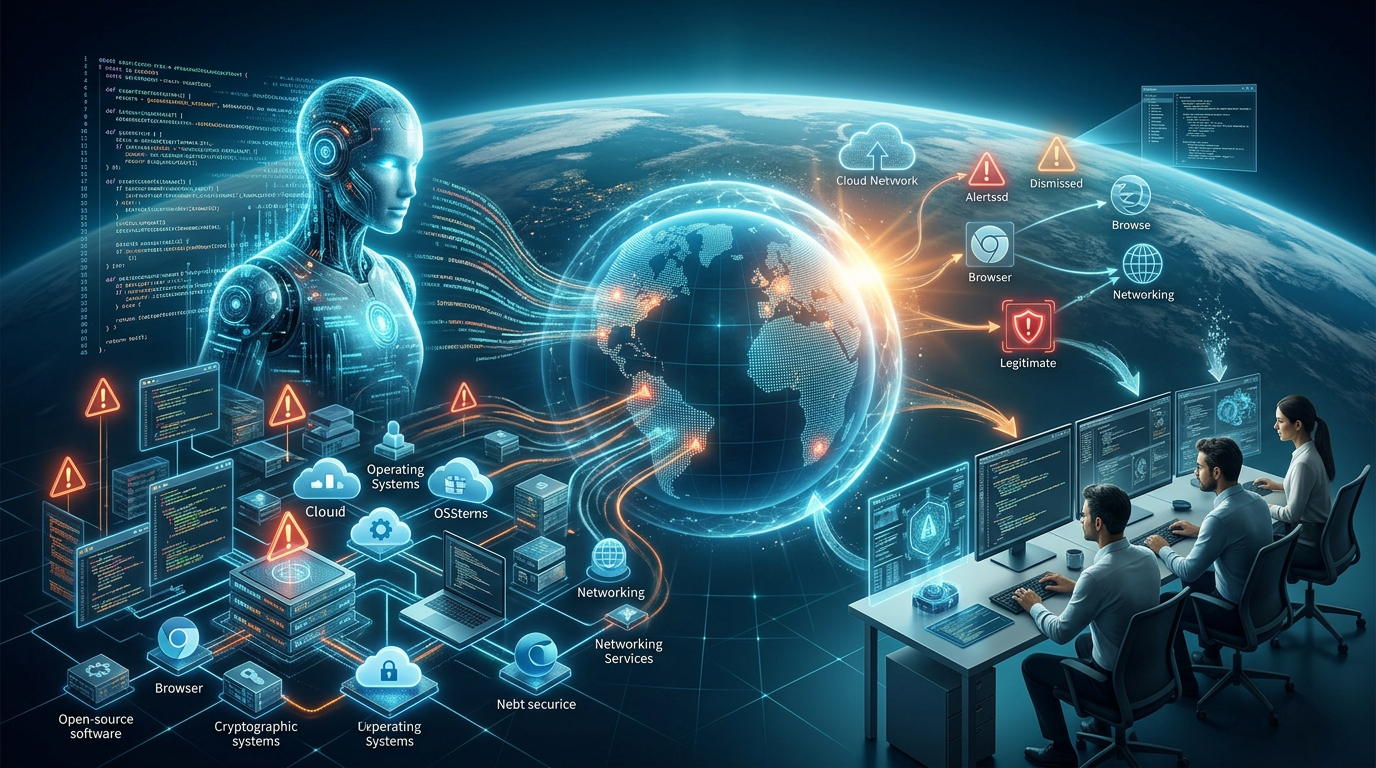
OpenAI's "Patch the Planet" Pairs AI and Human Researchers to Secure Open-Source Software — OpenAI has launched Patch the Planet, a security initiative under its Daybreak program built with Trail of Bits to help open-source maintainers find and fix vulnerabilities by pairing its cyber-focused AI models with human expert review. The program is meant to lighten maintainers' load rather than add to it: researchers confirm each flaw, weed out duplicates and false positives, reassess severity, and draft patches, while maintainers keep final say over fixes and disclosure. Early participants include cURL, Python, the Go project, and pyca/cryptography, with HackerOne and Calif assisting on triage and disclosure. In its first sprint across 19 projects, the effort uncovered hundreds of issues, merged dozens of patches, and built reusable tooling, while broader Daybreak work turned up flaws across the stack—from the Linux kernel and OpenBSD to Chrome, Safari, and Firefox. OpenAI frames it as shared defense for shared infrastructure and plans to release deeper technical reports as coordinated disclosures conclude. Open AI ↗
My takeaway: I like that OpenAI added humans to check the AI's findings, including catching false positives.
Summaries are AI-generated and may contain errors — always verify against the linked original. Each story links to its source, which holds the copyright. Outlet names are shown for attribution only and do not imply any endorsement or affiliation.
Disclaimer: The views expressed in My Takeaway are my own personal opinions and general observations on industry trends. They are not intended to criticize, disparage, or make factual claims about any specific company, product, or platform. Any platform names mentioned are referenced solely for illustrative and informational purposes.