AI Daily — November 23, 2026

Tools & Open Source
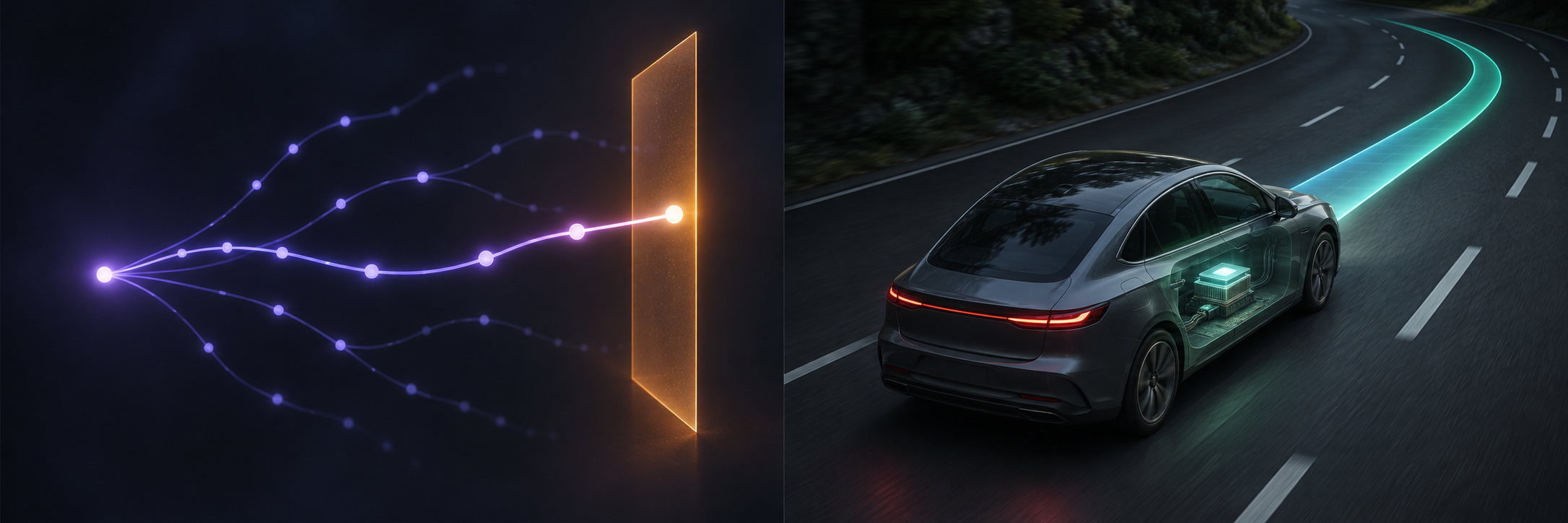
How NVIDIA Fits Self-Driving AI Reasoning Into Onboard Compute Limits — NVIDIA’s Alpamayo 2 Edge saves onboard computing power by generating detailed reasoning only when needed. On NVIDIA DRIVE AGX Thor, the optimized model turns camera inputs into a planned driving trajectory in 160–190 milliseconds. The article also shows how NVIDIA uses feedback from simulated driving and a tool called AlpaJudge to improve driving behaviour and evaluate the model’s explanations alongside its actions. Nvidia ↗
My takeaway: Nvidia optimized Alpamayo 2 Edge, its open-weight self-driving model, for DRIVE AGX Thor. The reported 160-190 ms latency reflects that setup and may vary with the hardware and inference configuration.
Policy & Society
Perplexity as a Guide to AI Progress and Safety — OpenAI’s Jakub Pachocki proposes using perplexity—a measure of prediction accuracy—to track AI progress and set shared development limits. Despite its limitations, he argues it could help labs anticipate emerging capabilities and coordinate safety measures as AI research accelerates. OpenAI ↗
My takeaway: If frontier labs adopt shared development limits based partly on perplexity, the next jump in model capabilities could depend on whey they meet agreed safety milestones.
Summaries are AI-generated and may contain errors — always verify against the linked original. Each story links to its source, which holds the copyright. Outlet names are shown for attribution only and do not imply any endorsement or affiliation.
Disclaimer: The views expressed in My Takeaway are my own personal opinions and general observations on industry trends. They are not intended to criticize, disparage, or make factual claims about any specific company, product, or platform. Any platform names mentioned are referenced solely for illustrative and informational purposes.